
Reading Uplistsikhe history through the town
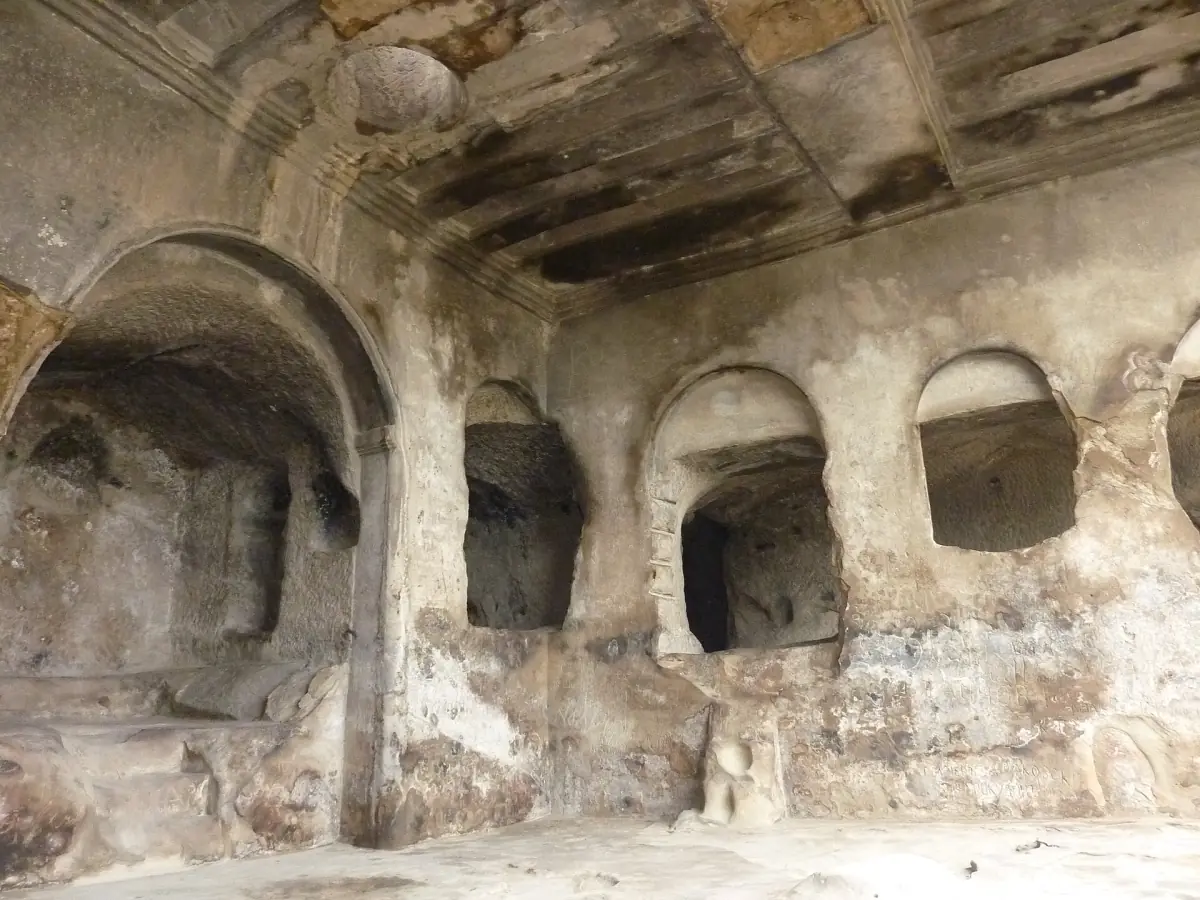
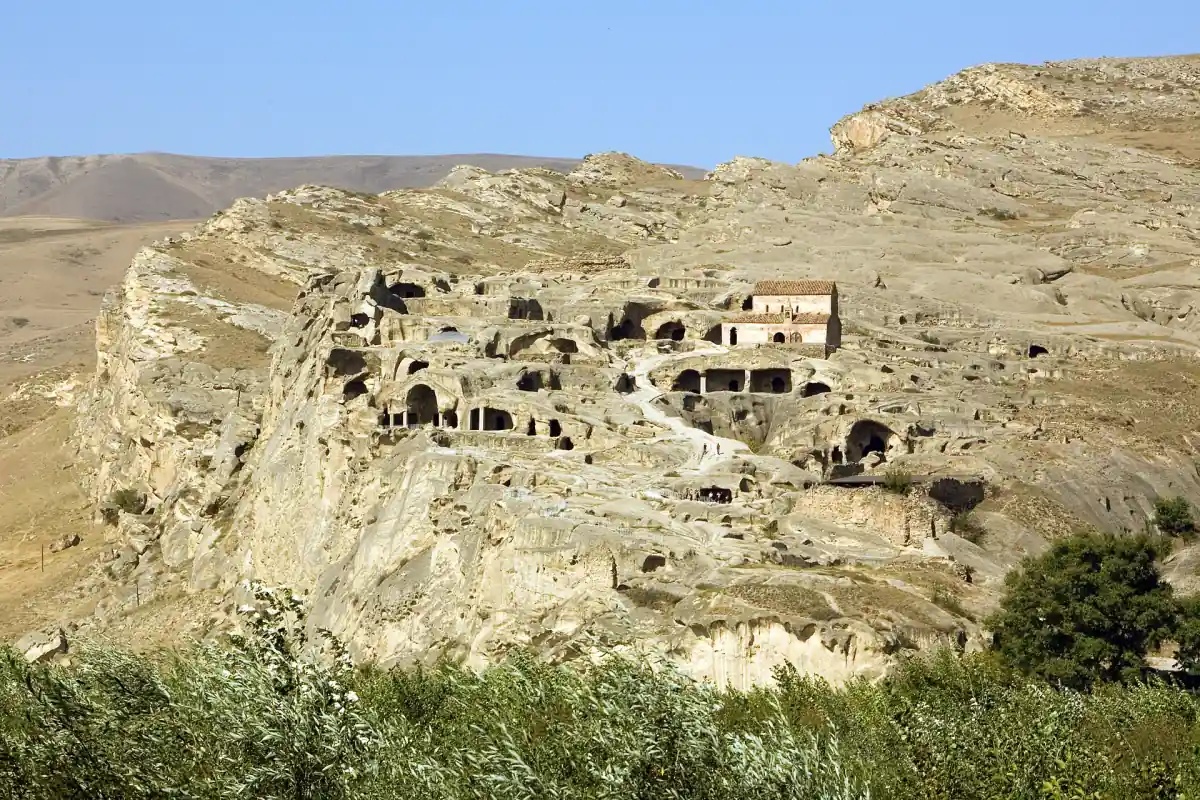
Uplistsikhe history is easier to follow when the rock rooms are seen as parts of a town. The settlement served as a temple city of the kingdom of Kartli and as a religious, economic and military-strategic centre. Streets and public spaces connect that wider role to the individual chambers you see during a visit. Allow time to look at the layout as well as the most eye-catching openings.
The surviving landscape brings several periods together. A walk can move between rock-cut spaces and later religious buildings, so a single date is less useful than a sequence of changing functions. Begin with the town’s role in Kartli, then place the medieval development alongside it. For the shapes and building materials themselves, use the separate architecture guide.
The visits presented here link the cave town with other historical places. Choose according to your starting point and the included interpretation, keeping the monument visit at the centre of your day. For the practical walk between rooms, passages and open areas, the cave town page helps turn this chronology into a manageable visit.
Visits to the cave town
For a guided trip, consider the option with a professional guide. The Uplistsikhe and Gori visit also includes Jvari and Svetitskhoveli; tickets cost extra.
Hand-picked tours, booked through GetYourGuide and Viator. Prices are indicative starting prices in euros (as of October 2026). Tap a tour for live availability and the current price in your currency.
Uplistsikhe and Gori visit
- Visit to Jvari Monastery
- Visit to Svetitskhoveli Cathedral
Uplistsikhe and Stalin Museum tickets cost extra.
Check availability →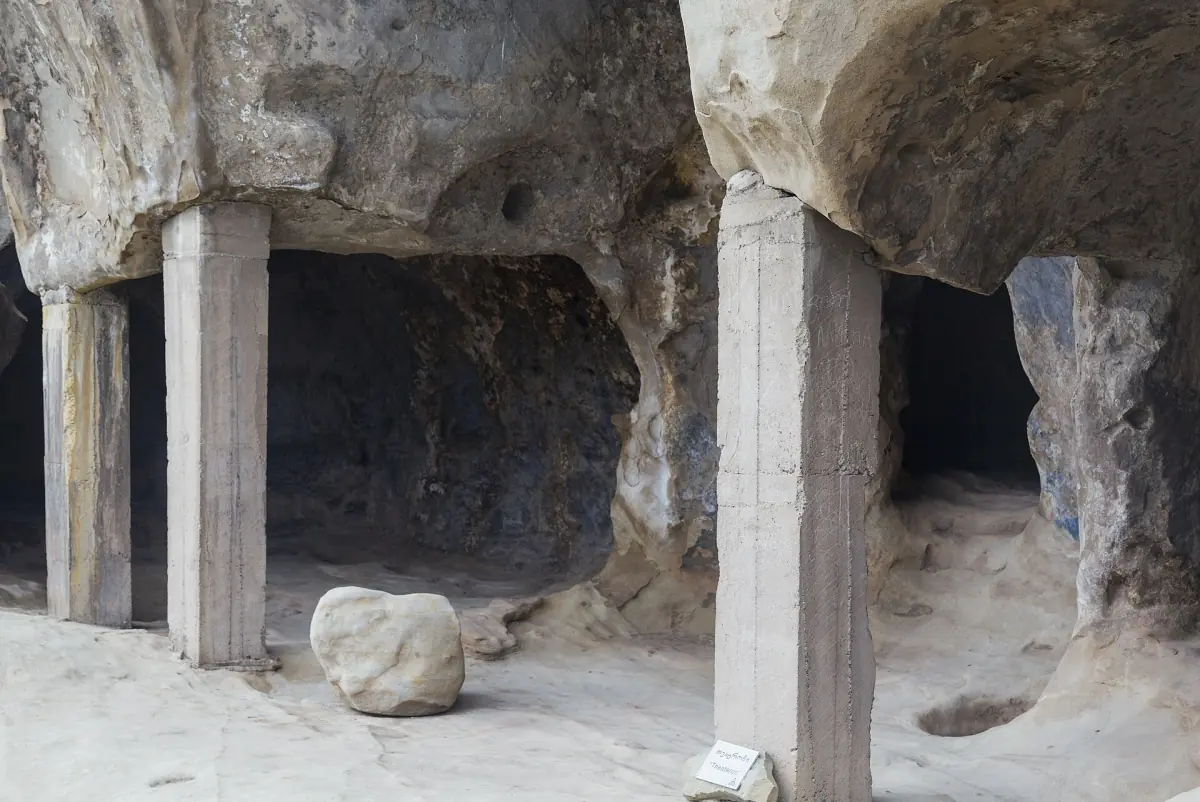
Cave town visit from Avlabari
- Transportation service
- Professional guide service
Check admission costs separately before booking.
Check availability →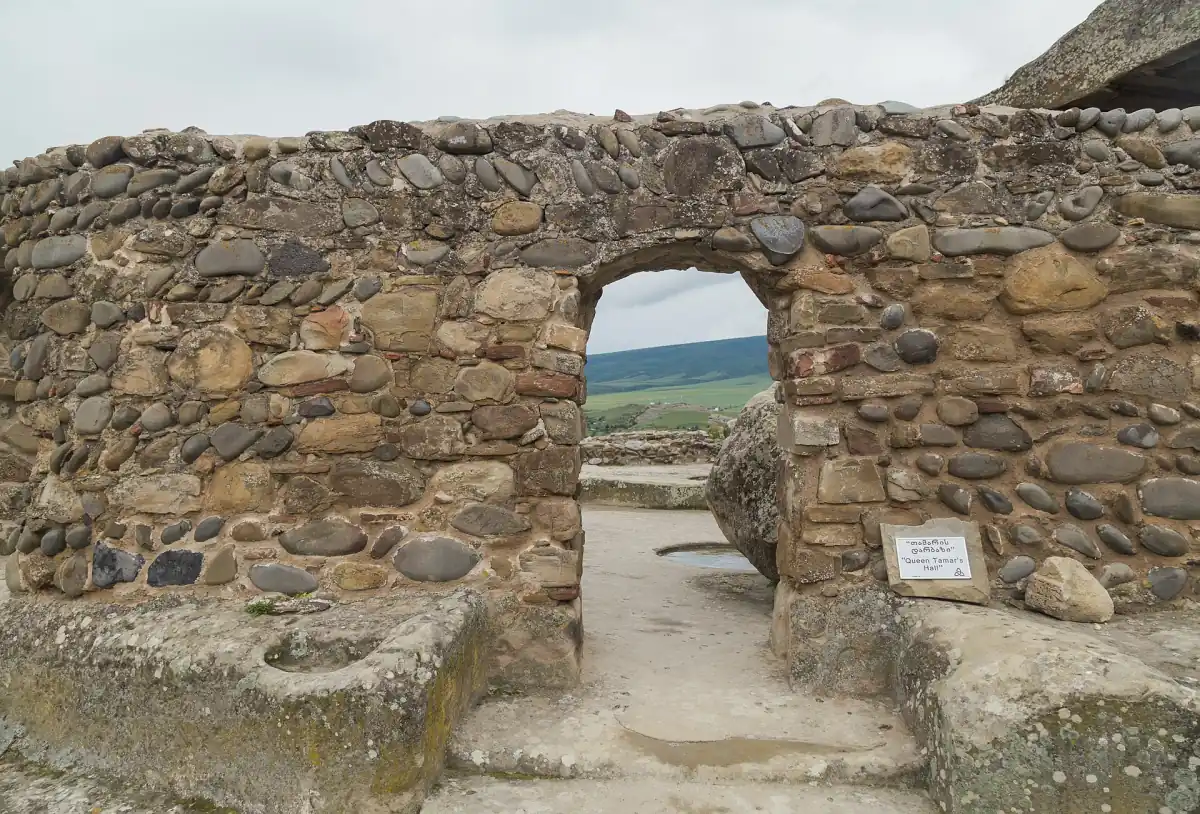
Uplistsikhe visit from Europe Square
- WiFi on board
- Air-conditioned vehicle
- English and Russian guide
Check admission costs separately before booking.
Check availability →Historical visits linking Uplistsikhe and Gori
Choose between a cave-city history route and combinations with professional guide services, starting from meeting points in Tbilisi.
Ancient history: religion, trade and strategy
The UNESCO submission describes the importance of Uplistsikhe during the Hellenistic period and Late Antiquity. These phases provide a useful frame for understanding a place with religious spaces, public rooms and an economic role. Read the chambers in relation to the streets and squares rather than trying to assign every opening to a single moment in ancient history.
Trade and military strategy belong alongside worship in the town’s story. Thinking about those functions together avoids reducing the settlement to a collection of temples. On a visit, the useful question is how the surviving spaces relate to one another: a public square, a chamber and a route through the rock can each contribute a different part of your understanding.
Medieval flourishing and later destruction
The historical account in the UNESCO submission places a flourishing phase in the ninth to eleventh centuries and devastation by the Mongols in the thirteenth century. Keep these later periods in mind when looking at the church above the rock spaces. The town’s medieval story is part of the visit, alongside the much earlier phases of its development.
Gori adds another historical setting to a combined day. Its fortress occupies a central rocky hill, while the old-town streets include restored houses with brick and wooden details. The Stalin Museum concerns a different period and subject. Our Gori guide treats the fortress, old town and museum as distinct stops, so the town’s twentieth-century association need not define your entire route.
Archaeology and the UNESCO Tentative List
An archaeological visit rewards careful observation of the spaces between the monuments. Roads, squares, sanctuaries, wine presses and cellars belong to the described town structure. Their value for a visitor is in showing a settlement with several functions. Leave room to compare the spaces instead of expecting every part of the site to look like the same type of building.
Uplistsikhe was submitted to UNESCO’s Tentative List on 24 October 2007. That is its heritage-list status, distinct from inscription on the World Heritage List. The submission is useful for the historical sequence and architectural description. The churches and other historical monuments of Mtskheta belong to a separate heritage setting when they appear on a combined excursion.
Three ways to arrange a historical visit
The cave-city and Gori history route meets at the I Love Tbilisi sign in Tbilisi. It combines Uplistsikhe, Gori, Jvari, Mtskheta and Svetitskhoveli Cathedral, with cave-town and Stalin Museum admission extra. Its ten-hour field is a validity period. Choose it for the combination of historical stops, with your time inside each place shaped by the day’s programme.
The Mtskheta, Gori and Uplistsikhe day trip meeting at Avlabari metro station lists a ten-hour duration. Transportation and a professional guide are included. The nine-hour guided combination starting at Europe Square includes an air-conditioned vehicle, WiFi and a professional English- and Russian-language guide. These options suit visitors who want interpretation alongside the journey between historical places.
Compare the routes by meeting point, language and included services, then arrange the visit around the subjects you most want to understand. The admission page covers the monument fee separately. If you want a different combination or a private day, continue to the tour comparison rather than trying to fit every historical stop into one outing.
Questions about your visit
Was Uplistsikhe only a religious site?
It was a temple town of Kartli with religious, economic and military-strategic functions. The public spaces and streets help explain that broader role.
Is Uplistsikhe a UNESCO World Heritage Site?
It is on the Tentative List, following submission on 24 October 2007. Tentative listing and World Heritage inscription are separate statuses.
Do these visits include an archaeology specialist?
The options include historical routes and, where specified, professional guide services. Choose the included service and language that match the kind of visit you want.